
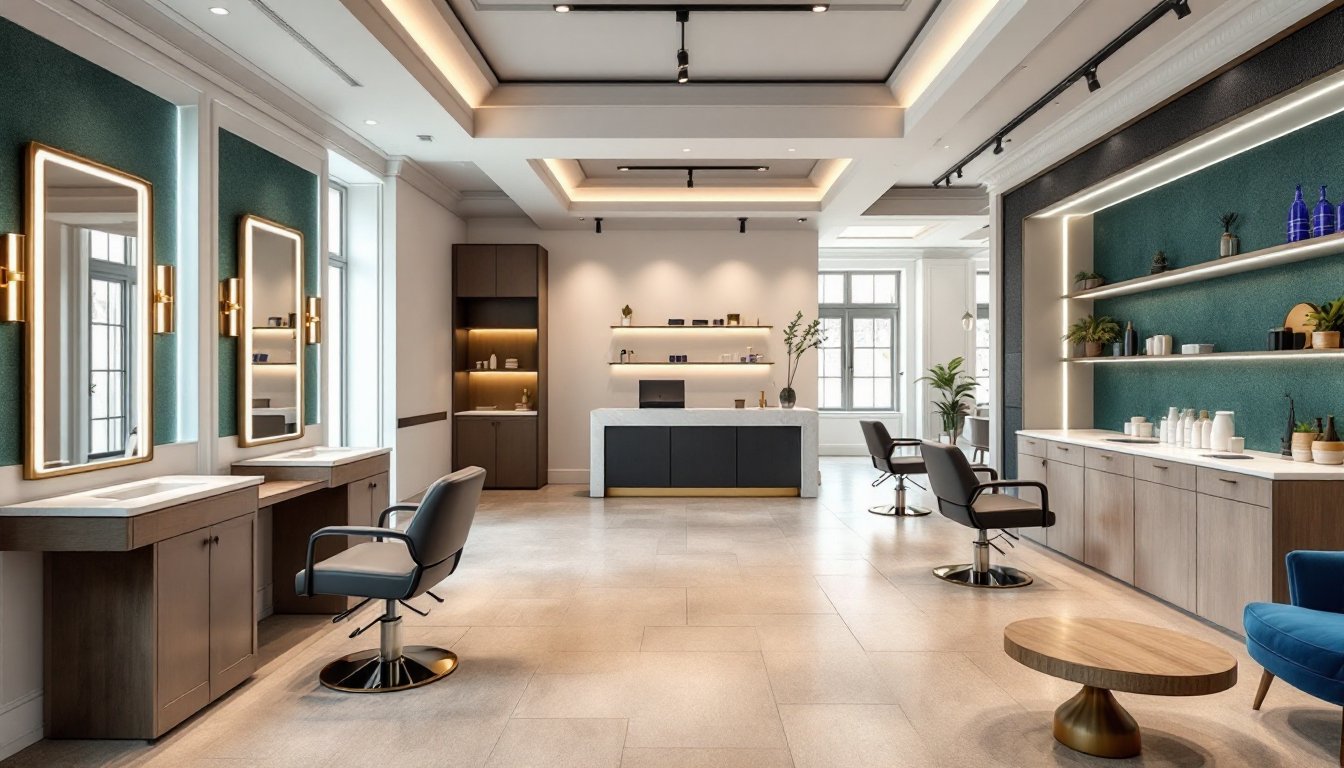

Creating a luxury salon isn’t just about slapping marble on the counter and calling it a day. It’s about building an environment where clients feel valued the moment they step through the door, and where they’re willing to pay premium rates for the experience. Whether you’re renovating an existing space or building from scratch, the interior design choices you make will directly impact client retention and revenue. This guide walks through the practical elements that separate a luxury salon from a standard one, covering layout, materials, lighting, and finishes that deliver both visual impact and long-term durability.
Table of Contents
ToggleKey Takeaways
- Luxury salon interior design prioritizes timeless quality, durable materials, and cohesive design language over trendy flourishes—invest in solid surfaces, real wood, and finishes that age gracefully to justify premium pricing.
- Strategic layout with proper zoning, at least 60 inches of ADA-compliant walkways, and clustered plumbing saves construction costs while improving both client comfort and operational efficiency.
- Specify commercial-grade flooring like large-format porcelain tile or 20-mil LVP, non-porous quartz countertops, and proper acoustic treatments to handle daily chemical exposure and heavy use in high-end salon spaces.
- Layered lighting with 5000K-5500K color temperature and 90+ CRI at styling stations, combined with backlit mirrors and dimmers, prevents color matching errors and creates a sophisticated, flattering environment.
- Commercial-grade furniture with hydraulic safety ratings, sealed finishes, and cleanable upholstery—not residential pieces—communicates luxury and withstands daily salon demands.
- Neutral color bases with jewel-tone accents and coordinated metal finishes create timeless sophistication, while proper permits, electrical upgrades (200-amp minimum service), and professional installation separate polished luxury designs from DIY attempts.
What Defines Luxury Salon Interior Design?
Luxury salon design isn’t about trends, it’s about timeless quality and attention to detail. The difference shows in the weight of a door handle, the finish on a mirror frame, and the way surfaces resist wear after thousands of clients.
Material quality matters more than decorative flourishes. Solid surface countertops, real wood trim (not laminate), and commercial-grade upholstery separate high-end spaces from budget builds. Luxury means investing in finishes that age gracefully rather than showing every scuff within six months.
Cohesive design language runs through every element. Hardware finishes should match across door handles, light fixtures, and faucets. If you’re mixing metals, say, brushed brass with matte black, do it intentionally with a 70/30 ratio, not haphazardly.
A glamorous luxury beauty salon interior design prioritizes the client experience at every touchpoint. That includes acoustic treatment (luxury doesn’t include echoing blow dryers), climate control in each zone, and thoughtful separation between service areas. When spaces like upscale dining rooms blend form and function seamlessly, that same principle applies here.
Essential Elements of a Luxury Salon Layout
Layout determines workflow efficiency and client comfort, get it wrong and even expensive finishes won’t save the space.
Entry and reception positioning set the tone. The front desk should be visible from the entrance but not blocking the view into the salon. Allow at least 60 inches of clearance in walkways for ADA compliance and comfortable traffic flow. If local code requires wider paths, follow that.
Zoning separates service types to manage noise and activity. Cutting stations work best along perimeter walls with natural light. Color processing needs its own zone with proper ventilation (this may require additional HVAC work and permits). Shampoo stations benefit from being slightly secluded but not isolated, clients shouldn’t feel forgotten back there.
Plumbing clusters save on construction costs. Group sinks and any wet areas to minimize the plumbing chase. If you’re gutting an existing space, map existing drain locations before finalizing layout, moving drains through a concrete slab gets expensive fast.
Private treatment rooms for waxing, facials, or consultations need solid-core doors (not hollow-core) for sound dampening and a sense of privacy. Each room should have its own climate control if budget allows.
Consider how rendering software can help visualize traffic patterns and spatial relationships before construction begins. It’s easier to spot layout mistakes in 3D than after the drywall goes up.
Choosing Premium Materials and Finishes
Material selection impacts both aesthetics and maintenance. Luxury salons need surfaces that handle daily chemical exposure, moisture, and heavy use.
Flooring takes the most abuse. Large-format porcelain tile (24×24 inches or larger) with rectified edges delivers a sleek, grout-line-minimal look. Choose matte or honed finishes, polished tile becomes a slip hazard when wet. If going with luxury vinyl plank (LVP), select commercial-grade with a 20-mil wear layer minimum. Residential-grade LVP will show traffic patterns within a year in high-use areas.
Countertops and stations should use non-porous materials. Quartz engineered stone resists stains from hair dye and acetone better than natural stone. If using marble (a popular luxury choice), expect to reseal it every six months and accept that etching from acidic products will occur. Some designers prefer this patina: others call it damage. Know which camp you’re in before specifying marble.
Wall treatments beyond paint add depth. Textured wall panels in 3/4-inch MDF with a moisture-resistant primer work well in dry areas. Avoid fabric wall coverings near chemical services, they absorb odors and stains. Tilework with accent materials like glass mosaic or metal trim adds luxury without excessive cost if used strategically (one accent wall, not the entire salon).
Ceiling treatments often get overlooked. A coffered ceiling with crown molding or a dropped soffit with integrated lighting transforms the space. If working with an existing drop ceiling, consider upgrading to acoustic tile in a tegular edge (recessed grid) for a more refined look than standard flat panels.
Many high-end spaces, from luxury home kitchens to salons, share a focus on durable, beautiful surfaces that justify their upfront cost through longevity.
Lighting Design That Elevates the Experience
Lighting makes or breaks a salon. Poor lighting results in color correction mistakes and unflattering client selfies, neither builds your reputation.
Color temperature matters critically. Use 5000K-5500K bulbs (daylight spectrum) at styling stations for accurate color work. Warmer tones (3000K) work in reception and waiting areas for a relaxed feel, but never at stations where color decisions happen.
Color Rendering Index (CRI) should be 90 or higher for all salon lighting. This measures how accurately colors appear under artificial light. Cheap LED strips with low CRI make colors look flat and can throw off hair color matching. It’s worth the extra $3 per bulb.
Layered lighting creates dimension. Combine ambient (overhead recessed lights), task (adjustable spotlights at each station), and accent lighting (wall sconces, backlit mirrors, under-cabinet LEDs). A common mistake is overlighting, too many fixtures create harsh shadows and glare.
Mirror lighting deserves special attention. Backlit mirrors with edge-lit LED strips provide even, shadow-free illumination. If using sconces flanking mirrors, position them at 60-65 inches above finished floor (not above the mirror) to minimize shadows under eyes and chin. According to insights shared by designers at Architectural Digest, lighting placement dramatically impacts perceived luxury in any high-end space.
Dimmers on all circuits allow mood adjustment. Install electronic low-voltage (ELV) dimmers for LED compatibility, standard dimmers cause LED flicker and buzzing. This is a detail that separates professional installations from DIY attempts.
Electrical capacity may need upgrading. A full salon build easily requires 200-amp service minimum. Multiple styling stations with blow dryers, plus HVAC and water heaters, pull serious amperage. Consult a licensed electrician early, electrical upgrades often require permits and inspections per NEC code.
Furniture Selection for Comfort and Style
Salon furniture isn’t residential furniture, it needs to handle commercial use while looking elegant.
Styling chairs are the centerpiece. Hydraulic bases should have a five-star rated capacity of 400+ pounds for safety and durability. Cast aluminum or steel bases last longer than plastic. Upholstery should be commercial-grade vinyl or leather (real or bonded), not fabric, it needs to shed hair and tolerate disinfectant spray daily. Budget $400-$1,200 per chair for quality that lasts.
Shampoo bowls and chairs need proper ergonomics. Adjustable-height bowls prevent stylist back strain. Reclining shampoo chairs should lock securely in position, wobbly chairs read as cheap, not luxurious. If purchasing used equipment, inspect hydraulic seals and chair mechanisms carefully.
Reception furniture sets the first impression. A solid wood or stone reception desk conveys permanence and quality. Budget particle-board units with laminate veneer don’t hold up and look dated quickly. If building custom millwork, use plywood with hardwood veneer and finish with conversion varnish (more durable than polyurethane).
Waiting area seating should avoid anything too residential-looking. Commercial-grade lounge chairs with cleanable upholstery work better than residential sofas. Side tables need sealed surfaces, untreated wood rings from water glasses within weeks.
Storage and display should be built-in or custom rather than freestanding shelving units. Floating shelves with concealed brackets look more intentional than hardware-store brackets. For retail product display, glass shelving with LED edge lighting adds luxury and highlights merchandise. Much like how minimalist living rooms emphasize quality over quantity, salon furniture should be purposeful and well-crafted.
Color Palettes That Convey Sophistication
Color choices impact perceived value and client mood. Luxury palettes tend toward restraint rather than bold statements.
Neutral bases provide longevity. Soft grays, warm whites, and beiges don’t compete with hair colors or date the space. Benjamin Moore’s “Gray Owl” or Sherwin-Williams “Accessible Beige” are proven neutral bases that read as intentional rather than boring. Use low-VOC or zero-VOC paints, chemical-sensitive clients and staff will appreciate it.
Accent colors add personality without overwhelming. Deep jewel tones (emerald, sapphire, burgundy) work as accent walls or in upholstery. Metallics, brushed brass, rose gold, matte black, function as both accents and finishes. Avoid trendy colors that date quickly. That Millennial pink might feel current now but will scream “2019” in five years.
Monochromatic sophistication works well in luxury contexts. Varying shades of one color family with different textures creates depth without chaos. Think charcoal tile, gray walls, pewter fixtures, and white oak accents, all cool-toned but with textural variety.
Test before committing. Paint large sample boards (2×2 feet minimum) and view them in the actual space under both natural and artificial light at different times of day. Colors shift dramatically based on lighting and adjacent materials. Design platforms like Home Bunch showcase how professional designers layer neutral palettes with textured materials for sophisticated results.
Wood tones matter too. Warm woods (walnut, teak) pair well with brass and warm grays. Cool-toned woods (white oak, maple) work with chrome and cool grays. Mixing warm and cool tones reads as unintentional unless done very carefully with a strong design concept.
Conclusion
Building a luxury salon requires more than aesthetic choices, it’s about construction quality, durable materials, and thoughtful layout that supports both client experience and operational efficiency. Focus on elements that age well, specify commercial-grade materials where it matters, and don’t skip permits for plumbing, electrical, or structural work. The upfront investment in quality pays off in lower maintenance costs and the ability to charge premium rates that match the environment you’ve created.