
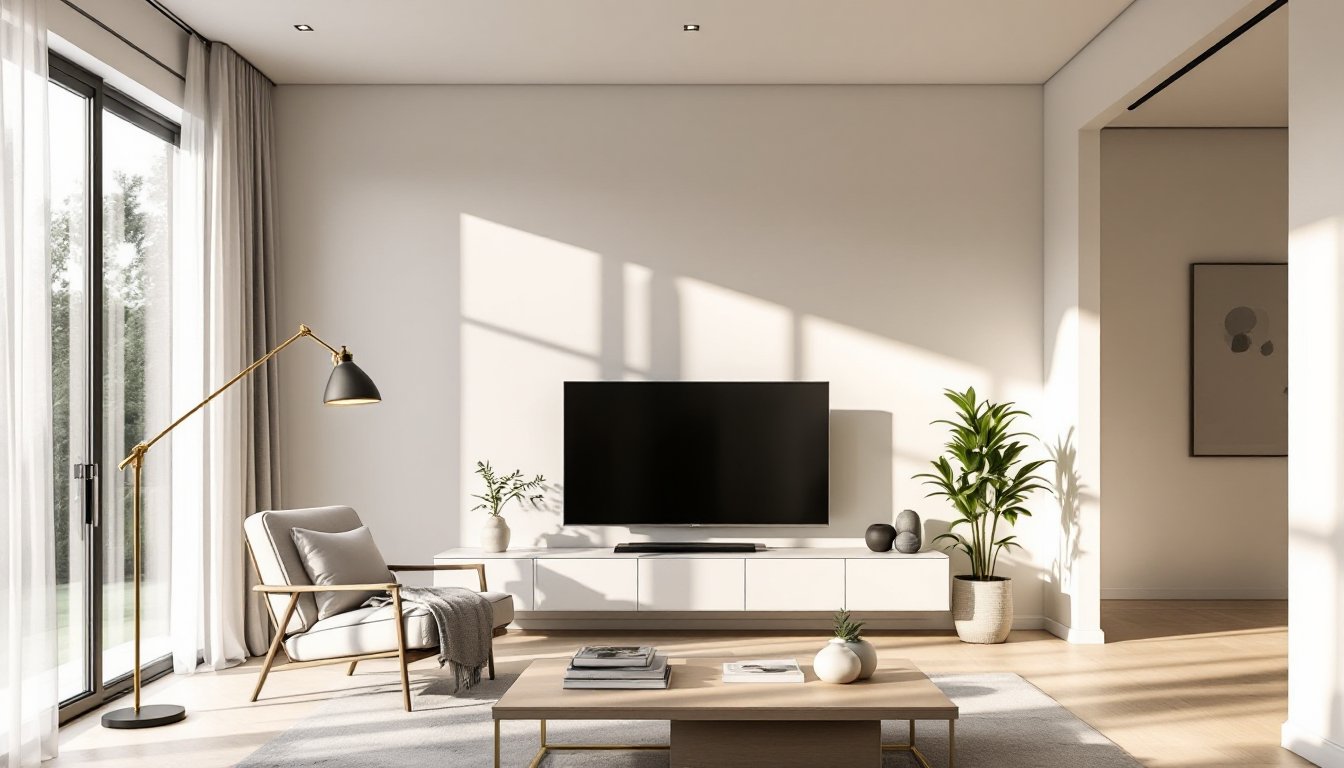

Walk into a well-lit room and everything feels right, colors pop, corners feel inviting, and the whole space just works. Step into a poorly lit one and even expensive furniture can’t save it. Light isn’t just about seeing: it’s about mood, function, and making rooms feel like they belong in a magazine spread instead of a cave. Most homeowners treat lighting as an afterthought, slapping a ceiling fixture in the center and calling it done. But lighting is a layered system, and getting it right transforms how a space looks, feels, and functions. Here’s how to tackle interior lighting like someone who knows what they’re doing.
Table of Contents
ToggleKey Takeaways
- Light in interior design is a layered system—combining ambient, task, and accent lighting—that transforms how a space looks, feels, and functions far more than any single design element.
- Ambient lighting requires approximately 20 lumens per square foot, and installing dimmers on every circuit allows you to adjust mood from task-focused brightness to evening relaxation.
- Task lighting eliminates shadows and improves functionality: under-cabinet LEDs in kitchens, flanking sconces in bathrooms, and adjustable lamps in workspaces prevent poor lighting from undermining your design.
- Warm white light (2700K–3000K) creates cozy, inviting atmospheres ideal for living spaces, while cool white (3500K–5000K) provides clarity and alertness suited for kitchens and offices—consistency within zones prevents jarring transitions.
- Natural light multiplied through mirrors, reflective paint finishes, and clean windows can nearly double perceived brightness and should complement your artificial lighting strategy.
- Accent lighting at three times the brightness of ambient light highlights architectural features and artwork, transforming a functional room into a polished, magazine-worthy space.
Why Lighting Is the Most Underrated Element of Interior Design
Most DIYers will spend hours picking the perfect paint color or hunting down the right throw pillows, then stick a single overhead bulb in the room and wonder why it feels flat. Lighting does more heavy lifting than almost any other design choice, it defines spatial boundaries, highlights architectural features, and can make a cramped room feel spacious or a cavernous one feel cozy.
Bad lighting kills good design. A beautifully tiled backsplash disappears under dim lighting. A carefully curated gallery wall looks muddy without proper illumination. Even the dining room layout you spent weeks planning won’t shine (literally) if the chandelier is too high, too dim, or the wrong color temperature.
Professional designers layer light the same way they layer textures, different sources at different heights serving different purposes. That means thinking beyond the builder-grade ceiling fixture. It means understanding that light color, intensity, and placement all work together. Get those variables right and you won’t just see the difference, you’ll feel it every time you walk into the room.
The challenge? Most residential spaces are under-lit by default. Builders install the minimum required fixtures to pass inspection, leaving homeowners to figure out the rest. That’s where a DIY approach pays off, you can retrofit and upgrade lighting without tearing down walls or hiring an electrician for every change.
The Three Essential Types of Interior Lighting
Ambient Lighting: Setting the Foundation
Ambient lighting is your base layer, the overall illumination that lets you move through a room safely. Think recessed ceiling cans, flush-mount fixtures, or track lighting. This is what builders install by default, and it’s necessary but not sufficient.
For most living spaces, aim for roughly 20 lumens per square foot for ambient light. A 200-square-foot living room needs about 4,000 lumens total from all ambient sources. That might be four recessed LED cans at 1,000 lumens each, or a combination of a ceiling fixture and a floor lamp.
Recessed lighting (often called can lights) works well in rooms with low ceilings or modern aesthetics. Space them roughly 4 to 6 feet apart and about 2 feet from walls to avoid harsh shadows. If you’re retrofitting, look for remodel-rated housings that don’t require attic access, they clamp from below and meet fire codes.
Flush or semi-flush ceiling fixtures are another solid option, especially in bedrooms and hallways. Just avoid the temptation to use a single center fixture as your only light source. It creates a spotlight effect that leaves corners dim and makes the room feel smaller.
Dimmers are non-negotiable for ambient lighting. Install them on every ambient circuit. A basic single-pole dimmer runs $15 to $30 and takes 20 minutes to swap in (shut off the breaker first). Dimming capability lets you dial the mood from bright task mode to evening chill without adding more fixtures.
Task Lighting: Functionality Meets Style
Task lighting is focused, directional light for specific activities, reading, cooking, shaving, or working. This is where function trumps aesthetics, though the two don’t have to be mutually exclusive.
In kitchens, under-cabinet LED strips are the gold standard. They eliminate shadows on countertops where you’re chopping and prepping. Install them toward the front edge of the cabinet base (not the back wall) so light hits the work surface, not just the backsplash. Hardwired units look cleaner, but plug-in LED strips are a solid DIY option if you’ve got outlets inside the cabinets.
Bathroom vanity lighting is chronically bad in most homes. A single overhead fixture casts shadows under eyes and chins, terrible for grooming. Flank the mirror with vertical sconces or install a horizontal light bar above at about 75 to 80 inches from the floor. Aim for a combined 800 to 1,000 lumens per sink.
For reading or desk work, adjustable task lamps give you control over direction and intensity. Swing-arm wall-mounted lamps save desk space and look sharp in a home office or next to a reading chair. Many minimalist living rooms integrate sleek task lamps that double as sculptural elements.
Pendant lights also serve as task lighting when hung low over islands, dining tables, or workbenches. Hang them 30 to 36 inches above the surface for optimal light without head-bumping. Use multiple smaller pendants instead of one large fixture to distribute light more evenly.
Accent Lighting: Adding Drama and Depth
Accent lighting is the layer that takes a room from functional to polished. It highlights artwork, architectural details, plants, or textured walls, anything you want to draw the eye toward.
Track lighting and picture lights are classic accent tools. Install track heads on a ceiling-mounted rail and aim them at wall art, open shelving, or a feature wall you want to emphasize. Adjustable heads let you tweak the angle as you rearrange decor.
Wall sconces serve double duty, they provide ambient fill and accent vertical surfaces. In hallways or stairwells, sconces break up long expanses and add visual interest. Space them 6 to 8 feet apart and mount at about 60 inches off the floor for balanced light.
LED strip lights have become a DIY favorite for accent work. Tuck them behind crown molding, under floating shelves, or along the base of kitchen islands for indirect glow. Use warm white (2700K to 3000K) strips to keep the effect cozy, not clinical.
A note on ratios: accent lighting should be three times brighter than ambient lighting in the area to create noticeable contrast. If your ambient light is 50 lumens per square foot in a display niche, your accent spot should hit around 150 lumens on the object.
How to Choose the Right Light Temperature for Each Room
Color temperature, measured in Kelvins (K), changes the entire feel of a space. And most people get it wrong by defaulting to whatever bulb is on sale.
Warm white light (2700K to 3000K) mimics incandescent bulbs and creates a cozy, inviting atmosphere. Use it in living rooms, bedrooms, dining rooms, and anywhere you want people to relax. It makes skin tones look healthy and softens hard edges. According to House Beautiful, warm tones are trending heavily in 2026 residential design for their ability to counteract the cold minimalism of previous years.
Cool white or daylight (3500K to 5000K) is crisp and energizing. It works well in kitchens, bathrooms, laundry rooms, garages, and home offices, anywhere you need clarity and alertness. Cooler light improves color accuracy, which matters when you’re matching paint samples or applying makeup.
Mixing temperatures in adjacent spaces feels jarring. If your kitchen is lit at 4000K and your dining room at 2700K, the transition is uncomfortable. Stick to one temperature family per floor or zone. You can vary intensity with dimmers, but keep the color consistent.
CRI (Color Rendering Index) also matters. It measures how accurately a light source shows colors compared to natural sunlight. Aim for a CRI of 90 or higher in spaces where color matters, kitchens, closets, and bathrooms. Cheap LEDs often sit around CRI 80, which makes reds look muddy and whites look greenish.
Don’t trust package labels blindly. Many bulbs labeled “soft white” land closer to 3500K than 2700K. If you’re picky (and you should be), check the actual Kelvin rating printed on the packaging or the bulb base.
Natural Light Strategies to Brighten Your Space
No artificial lighting system beats natural daylight. It’s free, it’s full-spectrum, and it changes throughout the day in ways that make spaces feel alive. The challenge is maximizing what you’ve got and controlling it when you have too much.
Start with window treatments. Heavy drapes block light even when open. Swap them for sheer panels or cellular shades that diffuse light without eliminating it. Top-down/bottom-up shades give you privacy at eye level while letting light flood in from above.
Mirrors strategically placed across from or adjacent to windows bounce natural light deeper into a room. A large mirror on the wall opposite a window can nearly double perceived brightness. Avoid placing mirrors where they’ll create glare on screens or in sight lines.
Glossy or satin paint finishes reflect more light than flat/matte. In small or dim rooms, a satin finish on walls can improve brightness by 10 to 15 percent compared to flat paint. Use semi-gloss on trim and doors for even more reflectivity.
If you’re undertaking a larger project, consider adding transoms or sidelights to interior doors. They let light flow between rooms without sacrificing privacy. Frosted or textured glass works in bathrooms and bedrooms.
Skylight installation is a bigger lift, it requires cutting a roof penetration and flashing it properly, but the payoff is dramatic. A single 2×4-foot skylight can illuminate up to 300 square feet. Tubular skylights (sun tunnels) are easier to install and work well in hallways, closets, or bathrooms where a full skylight isn’t feasible. They use a reflective tube to channel daylight from the roof to a ceiling diffuser.
Light-colored flooring also contributes. White oak, light tile, or pale carpet reflect more light than dark walnut or charcoal laminate. If you’re refinishing floors or selecting new materials, factor in how they’ll interact with both natural and artificial light.
Finally, keep windows clean. It sounds obvious, but dirty glass can block up to 40 percent of incoming light, according to Homedit. Wash exterior and interior panes seasonally, and you’ll notice an immediate difference, no tools required beyond a squeegee and some soapy water.
For those working within Scandinavian design principles, maximizing natural light isn’t optional, it’s foundational. Northern European climates prize every minute of daylight, and that ethos translates directly into window placement, color palettes, and reflective surfaces.