
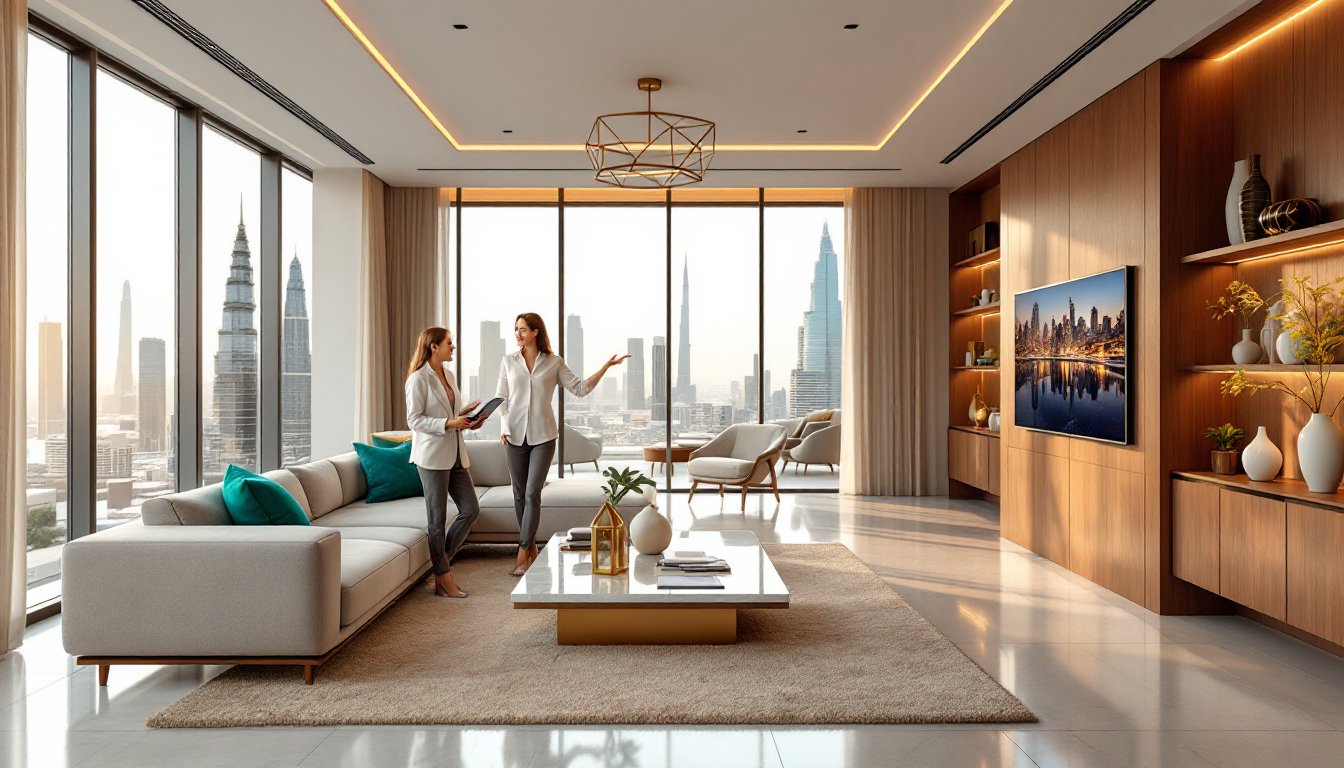

Dubai’s interior design market blends Middle Eastern tradition, ultra-modern luxury, and a builder-friendly environment that moves faster than most cities worldwide. Whether you’re renovating a villa in Arabian Ranches or fitting out a high-rise apartment downtown, the right design partner can navigate permit requirements, source materials from global suppliers, and deliver on time, even though the region’s climate challenges. This guide cuts through the marketing gloss to spotlight companies with proven track records, explains what separates luxury specialists from budget-collaborative firms, and walks you through the local design process so you can hire with confidence.
Table of Contents
ToggleKey Takeaways
- The best interior design companies in Dubai combine expertise in local regulations, fast permitting (5–10 business days), and global material sourcing while handling climate-specific challenges like 50°C summers.
- Luxury firms charge 15–25% of total project value and offer turnkey services including renderings and contractor coordination, while budget-friendly options provide design-only packages starting at AED 20,000–50,000 for clients willing to manage procurement independently.
- Verify designer credentials, insurance coverage, and request to see completed projects in person—portfolio photos alone can mask quality issues with cabinet alignment, grout consistency, and paint finishes.
- The Dubai interior design process spans five phases over 4–6 months (apartments) or 6–9 months (villas): consultation, concept design, design development, procurement, and construction with weekly site supervision.
- Dubai’s freehold vs. leasehold property structure directly impacts renovation scope and permits—villas allow structural changes with engineer approval, while leasehold apartments face strict developer guidelines from companies like Emaar or Nakheel.
- Prioritize transparent pricing models and written contracts that define deliverables, design revision limits, and whether the designer discloses trade discounts or uses cost-plus billing to avoid mid-project cost surprises.
What Makes Dubai’s Interior Design Scene Unique
Dubai’s design ecosystem operates under the UAE’s Municipal Building Code and Civil Defense regulations, which dictate everything from fire-rated gypsum board in partition walls to MEP (mechanical, electrical, plumbing) routing in fit-outs. Unlike North American markets where permits can drag for weeks, Dubai Municipality and developer-specific approval boards often turn around residential permits in 5–10 business days, if paperwork is complete.
Material sourcing runs global. Italian marble, German cabinetry hardware, and Japanese sanitary fixtures arrive through Jebel Ali Port or Dubai Design District warehouses, but lead times fluctuate with Red Sea shipping lanes. Smart designers keep preferred vendor lists and specify alternates upfront. The region’s climate adds another layer: adhesives, paints, and sealants must tolerate 50°C summers and single-digit humidity swings. Products rated for North America or Europe sometimes fail within months.
Cultural diversity shapes aesthetics. A single building might house Emirati families favoring majlis-style seating, European expats chasing Scandinavian minimalism, and South Asian households wanting bold colors and intricate trim. Top firms maintain libraries of finish samples, from zellige tiles to walnut veneers, and know which combinations satisfy both client taste and landlord handover requirements.
Finally, Dubai’s freehold vs. leasehold property structure affects renovation scope. Freehold villa owners can demo load-bearing walls (with engineer approval), while leasehold apartment tenants face strict fit-out guidelines from master developers like Emaar or Nakheel. Always confirm your tenure type before signing a design contract.
Top Interior Design Companies in Dubai for Your Home Renovation
Luxury and Contemporary Design Specialists
High-end firms in Dubai typically charge 15–25% of total project value as design and management fees. That percentage covers concept development, 3D renderings, procurement, contractor coordination, and snagging (defect inspection). Expect turnkey budgets starting around AED 300,000 (USD $82,000) for a two-bedroom apartment: villas often run five to seven figures.
Algedra Interior Design handles large residential projects and specializes in modern Arabic and contemporary European styles. They maintain in-house joinery workshops, which cuts lead times for custom millwork, think floor-to-ceiling walnut paneling or lacquered kitchen islands. Their project managers liaise directly with Civil Defense for NOC (No Objection Certificate) submissions, a time-saver if your building requires fire-safety upgrades.
Aedas Interiors brings an architectural pedigree and excels at open-plan layouts that maximize natural light, critical in Dubai’s glass-heavy towers. They frequently specify luxury materials and finishes seen in high-profile projects, and their portfolio includes penthouses with integrated home automation (KNX or Crestron systems). If you’re gutting a unit down to the concrete slab, their structural coordination experience is an asset.
Bishop Design leans contemporary, with clean lines, neutral palettes, and statement lighting. They’re fluent in villa projects across Emirates Hills and Palm Jumeirah, where outdoor-indoor flow matters. Expect material boards featuring Corian countertops, porcelain slabs, and engineered oak flooring. They also coordinate with landscape architects if you’re adding a garden or pool deck, often a permitting gray area in villa communities.
All three firms provide detailed design renderings early in the process, reducing mid-construction surprises. They also carry trade accounts with suppliers, passing along 10–15% discounts on fixtures and furniture that offset part of their fee.
Budget-Friendly and DIY-Collaborative Firms
Not every homeowner needs a white-glove service. Budget-conscious firms charge flat fees (AED 20,000–50,000) or hourly rates (AED 300–600/hour) and hand off procurement to the client. You’ll get floor plans, elevations, and a material specification list, but you source the tiles, book the contractor, and manage the build.
Studio Forma offers this model. Their designers meet on-site, measure, draft in AutoCAD or SketchUp, and deliver a construction drawing set. You’re responsible for Municipal approvals (fairly straightforward for non-structural work) and hiring tradespeople. This approach works well for cosmetic refreshes, new flooring, paint, lighting upgrades, that don’t require engineer stamps. Studio Forma also runs half-day design consultations (AED 2,500) if you just need a second opinion on layout or finishes.
The Design Conspiracy operates as a hybrid. They’ll develop concept boards and 3D views, then let you choose: full turnkey management or a “design-only” package. Many clients start with design-only, then upgrade to project management once they realize coordinating AC duct rerouting, electrical panel upgrades, and tiler schedules is a full-time job. Expect transparent add-on pricing, no hidden fees.
For true DIY collaboration, platforms like Homify and regional directories such as interior design showcases let you filter by style, budget, and project type. Many listed designers offer piecemeal services: a kitchen layout for AED 3,000, a lighting plan for AED 2,000, or a single room concept for AED 5,000. Just confirm they understand local design contract terms, scope, payment milestones, and intellectual property rights matter, especially if you’re mixing their drawings with your own material picks.
How to Choose the Right Interior Designer for Your Project
Start with portfolio scrutiny. Look for projects matching your property type (apartment vs. villa), square footage, and aesthetic. A firm that nails minimalist penthouses may struggle with traditional Arabic majlis design. Ask for client references and, critically, request to see a completed project in person. Photos lie: walking a space reveals whether cabinet doors hang true, tile grout lines are consistent, and paint finishes are smooth.
Check credentials and insurance. Reputable designers carry professional indemnity insurance and often hold memberships in the British Institute of Interior Design (BIID) or similar bodies. While the UAE doesn’t mandate designer licensing for residential work, insurance protects you if a design error, say, specifying undersized HVAC ducts, causes rework costs.
Clarify the fee structure upfront. Percentage-based fees incentivize quality but can balloon if you upgrade materials mid-project. Flat fees cap costs but may not cover design revisions. Hourly rates suit small scopes but require diligent time tracking. Hybrid models exist: a flat concept fee plus hourly for procurement and site visits. Whatever the structure, get it in writing with defined deliverables, number of design revisions, site visit frequency, and whether renderings include furniture or just architecture.
Discuss the construction phase. Some designers hand off drawings and disappear: others visit weekly to check contractor progress and approve material substitutions. If you’re hiring your own contractor, ask whether the designer will answer the contractor’s questions (and how they charge for that time). Miscommunication between designer and builder is the top cause of DIY project delays.
Material selection transparency matters. Does the designer disclose trade discounts, or do they mark up materials as a revenue stream? Neither approach is unethical, but you should know. Some firms operate on a “cost-plus” model: you pay supplier invoices directly, and the designer charges a handling fee (typically 10–15%). Others quote all-in pricing. Just avoid designers who refuse to itemize costs, that’s a red flag.
Finally, gauge their familiarity with common design process phases. A seasoned pro will walk you through concept, schematic design, design development, and construction documentation without prompting. If they skip straight to picking paint colors, they may lack the technical chops for complex renovations.
What to Expect: The Interior Design Process in Dubai
The typical residential project in Dubai follows a five-phase timeline:
1. Consultation and Brief (1–2 weeks)
The designer visits your property, takes field measurements (often more accurate than developer plans), and discusses scope, budget, and timeline. You’ll share inspiration images, Pinterest boards are fine, but be ready to articulate why you like a space (the color? the layout? the lighting?). The designer produces a proposal outlining services, fees, exclusions, and a rough schedule. Review it carefully: vague language around “procurement” or “site supervision” causes disputes later.
2. Concept Design (2–3 weeks)
You’ll receive mood boards, preliminary floor plans, and sometimes a 3D walk-through. This stage is iterative, expect two or three revision rounds. The designer selects a palette (paint, flooring, countertops) and proposes furniture layouts. If structural changes are needed (removing a non-load-bearing wall, relocating a doorway), they’ll flag permit requirements. For villas, this phase often includes garden or majlis concepts.
3. Design Development (3–4 weeks)
Detailed drawings emerge: reflected ceiling plans (RCP) showing light fixture locations, electrical plans with switch and outlet positions, millwork shop drawings for custom cabinetry, and finish schedules listing every material by room. The designer finalizes specs, Dulux vs. Jotun paint, 12 mm vs. 18 mm engineered flooring, vitrified vs. porcelain tiles. They also prepare Municipal or developer submission packages if permits are required. For leasehold apartments, this includes NOC letters from the building management.
4. Procurement and Contracting (4–8 weeks)
The designer (or you, if working independently) orders materials and hires contractors. Lead times vary wildly: stock tiles arrive in days, but custom Italian cabinetry can take 12 weeks. Savvy designers build buffer time and specify local alternates. Contractors provide quotes based on the drawings: compare at least three bids and check references. Verify that contractors have valid UAE trade licenses and worker insurance, unlicensed labor voids your building insurance if there’s an accident.
5. Construction and Installation (6–12 weeks, depending on scope)
Work begins with demolition (if any), rough-in for electrical/plumbing changes, then finishes, flooring, painting, trim, lighting, and finally furniture installation. The designer conducts site visits to approve work and catch issues early. For example, if the electrician mounted outlets 40 cm above finished floor instead of the specified 30 cm, the designer flags it before drywall goes up. At the end, they’ll prepare a snagging list, a punch list of defects for the contractor to fix before final payment. In Dubai, withholding 5–10% of the contract value as a retention payment until snagging is resolved is standard practice.
Total timeline for a full apartment renovation: 4–6 months. Villas run 6–9 months, especially if outdoor work or pool installations are involved. Delays happen, shipping snarls, contractor scheduling conflicts, late design decisions, so pad your move-in date by at least a month.
Conclusion
Choosing an interior designer in Dubai hinges on matching your budget and involvement level with the right service model. Luxury firms deliver turnkey ease but command premium fees: budget-collaborative shops let you control costs at the expense of your time. Whichever route you take, insist on detailed contracts, transparent pricing, and proof of past work. Dubai’s fast-paced construction environment rewards preparation, nail down your scope, understand permit requirements, and keep communication tight with both designer and contractor. The result: a home that works as hard as it looks good.