
The dining room often gets overlooked until you’re hosting family dinner and realize the space feels more cluttered storage room than inviting gathering spot. Whether you’re working with a formal separate room or a corner off the kitchen, thoughtful dining room interior design can turn meal times into moments worth lingering over. This isn’t about filling Pinterest boards, it’s about making smart choices with furniture, finishes, and fixtures that’ll hold up to daily use while looking sharp. From selecting a table that fits your actual floor plan to installing a dimmer switch that sets the right mood, these practical design strategies will help you create a dining space that works as hard as it looks good.
Table of Contents
ToggleKey Takeaways
- Proper measurements and understanding your dining room’s layout—including traffic flow, lighting conditions, and dual-purpose usage—are essential before selecting any furniture or making design decisions.
- A dining room interior design prioritizes furniture quality: choose solid wood tables with strong joinery, maintain proper seat heights of 17–19 inches, and include storage like sideboards to hide clutter and serve meals seamlessly.
- Paint colors set the mood dramatically—deep saturated colors add coziness to large rooms but require excellent lighting, while lighter neutrals reflect light in smaller spaces; always test samples on multiple walls before committing.
- Layered lighting with a centered chandelier (30–36 inches above the table), a dimmer switch, and accent sconces creates both task illumination and ambiance; proper lighting is non-negotiable for a functional dining space.
- Flooring and area rugs ground the design—hardwood offers refinishing potential, luxury vinyl plank resists moisture on a budget, and rugs sized with at least 24 inches beyond the table edge define the zone while dampening sound.
- Thoughtful styling with scaled centerpieces, well-hung wall art at 57–60 inches height, and curated tableware completes the space without over-accessorizing; focus on functional pieces that enhance daily use.
Understanding Your Dining Room’s Potential
Before buying a single chair, measure the room. Use a tape measure, not guesswork, and note any permanent fixtures like radiators, windows, or built-ins that eat into usable square footage. Most design failures start here, with furniture that looked great online but crowds the space once delivered.
A functional dining setup needs 36 to 48 inches of clearance around the table for chairs to pull out and people to pass behind seated diners. Less than that and you’re playing musical chairs every meal. For rooms under 10×12 feet, consider a round or oval table: they eliminate sharp corners and improve traffic flow in tight quarters.
Assess your lighting conditions next. South-facing rooms flood with natural light and can handle darker wall colors or heavier drapes. North-facing spaces need all the help they can get, think lighter palettes and reflective surfaces. If the room doubles as a assignments zone or workspace, plan for layered lighting from the start rather than retrofitting later.
Finally, be realistic about how you use the space. A formal dining room that sits empty 360 days a year wastes prime real estate. If it’s pulling double duty as a home office or craft room, design around that reality with furniture that adapts and storage that hides the clutter when guests arrive.
Choosing the Right Furniture for Your Dining Space
The dining table is the anchor, get this wrong and everything else suffers. For everyday use, aim for 30 inches of table width per person. A standard rectangular table measuring 36×72 inches seats six comfortably, while a 42×96 inch table stretches to eight. If you host larger gatherings occasionally, extension tables with removable leaves offer flexibility without permanently hogging floor space.
Solid wood tables, oak, maple, walnut, stand up to decades of use and can be refinished if they take a beating. Veneer over engineered wood costs less and resists warping better in humid climates, but chips and scratches expose the substrate underneath. Glass tops show every fingerprint but visually lighten small rooms. Whatever material you choose, inspect joinery: mortise-and-tenon or dovetail joints outlast simple screws and brackets.
Chairs matter as much as the table. Seat height should measure 17 to 19 inches from the floor, with 10 to 12 inches of clearance between the seat and table apron. Armless chairs tuck neatly under the table and fit more people: armed chairs add comfort but require extra room. If you’re mixing chair styles, upholstered ends, wood sides, keep the seat height consistent or the table will feel lopsided.
Storage often gets ignored until you’re stacking serving platters on the floor. A sideboard or credenza provides landing space for serving dishes and hides table linens, chargers, and seasonal decor. Standard depth runs 18 to 24 inches, shallow enough to fit along most walls without blocking doorways. Open shelving looks airy but demands constant tidying: closed cabinets forgive clutter and protect dishware from dust.
Color Schemes and Wall Treatments That Set the Mood
Paint is the fastest, cheapest way to transform a dining room, and the easiest to mess up if you skip prep. Patch any holes with spackle, sand smooth, and prime before topcoats go on. Skipping primer on fresh drywall or over dark existing paint costs you in extra coats later.
For color selection, test samples on multiple walls. Paint looks different on a north wall versus a south wall, and it shifts from morning to evening light. Buy quart-size samples and brush 2×2 foot patches in different corners. Live with them for a few days before committing to gallons.
Deep, saturated colors, navy, forest green, charcoal, create drama and make large rooms feel cozier, but they also show imperfections in wall texture and require excellent lighting to avoid cave-like gloom. Lighter neutrals, greige, soft white, pale gray, reflect light and expand small spaces, though they can read bland without texture or contrast. One gallon of quality paint covers roughly 350 to 400 square feet with proper application: budget accordingly and buy extra for touch-ups.
Wainscoting or board-and-batten adds architectural interest and protects walls from chair backs. Install the cap rail at 32 to 36 inches from the floor, lower feels stumpy, higher cuts the wall awkwardly. Use a level and mark stud locations before nailing: hollow-wall anchors don’t hold trim securely. Paint the trim and upper wall in contrasting sheens (satin below, matte above) to define the break even when colors match. Many homeowners drawing inspiration from dining room design galleries overlook the importance of proper surface prep before applying bold colors.
Lighting Design: From Chandeliers to Ambient Fixtures
Dining room lighting does heavy lifting: task illumination for meals, ambient glow for conversation, and enough drama to make the space feel intentional. A single overhead fixture rarely cuts it.
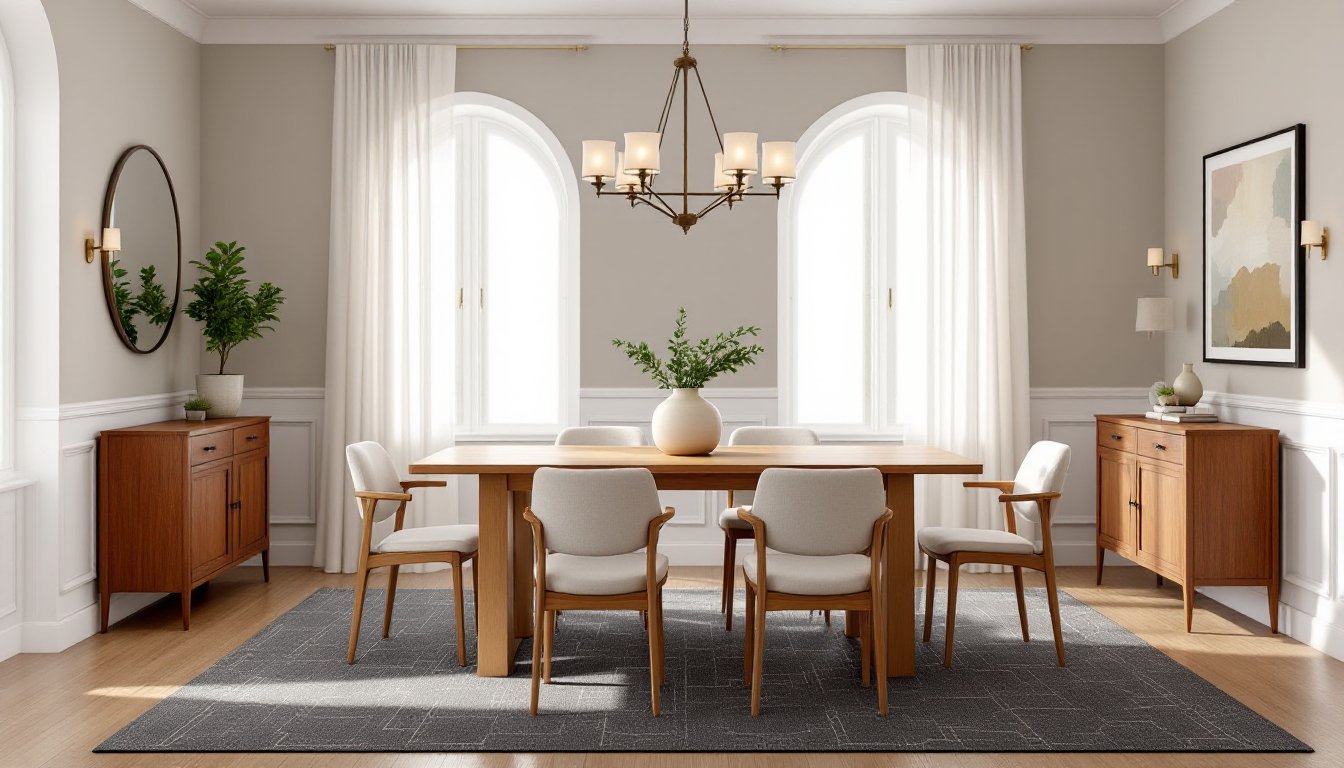
Chandeliers or pendant lights centered over the table set the tone. Hang the bottom of the fixture 30 to 36 inches above the table surface, low enough to light faces without blinding diners, high enough to clear sightlines. For an 8-foot ceiling, that leaves minimal wiggle room: consider flush-mount or semi-flush fixtures if headroom is tight. The fixture’s diameter should measure roughly half to two-thirds the table width: a 40-inch round table pairs well with a 20- to 26-inch chandelier.
Install a dimmer switch, not optional. It’s a $15 part and a 20-minute swap for anyone comfortable turning off a breaker. Dimming incandescent or LED bulbs (check LED compatibility) lets you dial intensity from bright task light to soft ambiance. The NEC requires a neutral wire in most new switch boxes, so if you’re working in an older home and hit a snag, call an electrician rather than jury-rigging.
Layer in accent lighting with wall sconces, picture lights over artwork, or LED strips inside glass-front cabinets. Sconces flanking a sideboard or mirror add symmetry and fill in shadows that overhead fixtures miss. Aim for 40 to 60 inches to center from the floor, adjusted based on furniture height and room scale.
Natural light deserves control too. Blackout-lined drapes or cellular shades prevent sun fade on wood furniture and let you manage glare during evening meals. Sheer panels soften harsh midday light without sacrificing brightness, a good compromise if the room feels cave-like with heavy treatments.
Flooring and Rugs That Ground Your Design
Dining rooms see spills, chair scrapes, and foot traffic, flooring needs to take a beating. Hardwood remains the gold standard for durability and refinishing potential. Three-quarter-inch solid oak or maple can be sanded and refinished multiple times over its lifespan. Engineered hardwood, a thin hardwood veneer over plywood core, costs less, resists moisture better, and works over concrete slabs or radiant heat, but you get only one or two refinishes before hitting the substrate.
Installing hardwood runs parallel to the longest wall in most layouts: it visually stretches the room. If you’re DIYing, rent a pneumatic flooring nailer, it’s faster and cleaner than hand-nailing, and most rental yards stock them. Leave a half-inch expansion gap at walls: wood swells and contracts with humidity, and tight fits lead to buckling.
Luxury vinyl plank (LVP) mimics wood grain at a fraction of the cost and stands up to moisture that would ruin hardwood. Quality LVP measures at least 5mm thick with a 20-mil wear layer for high-traffic areas. Click-lock floating floors install without glue or nails, ideal for DIYers, but they telegraph subfloor imperfections. Level low spots with self-leveling compound and sand down high spots before laying planks.
Area rugs define the dining zone and dampen noise in open-plan spaces. Size the rug so all chair legs sit on it even when pulled out, that means at least 24 inches beyond the table edge on all sides. An 8×10 rug fits a 4×6 table: a 9×12 rug accommodates a 6×8 table. Flatweave or low-pile rugs (under half an inch) make chair movement easier than shag or high-pile styles. Look for stain-resistant fibers like polypropylene or treated wool, and use a non-slip rug pad to prevent bunching. Principles from Scandinavian design often emphasize natural textures and neutral rugs that ground the space without overwhelming it.
Styling and Accessories That Complete the Look
A well-designed dining room still feels unfinished without the details, but resist the urge to over-accessorize. Start with a centerpiece that scales to the table: a low arrangement of greenery or candles for everyday, statement pieces for special occasions. Keep centerpieces under 12 inches tall so diners can see across the table.
Wall art anchors the room visually. Hang a single large piece or a gallery wall opposite the main entry so it’s the first thing guests see. The center of the artwork should hit around 57 to 60 inches from the floor, standard gallery height. Use a level and measure twice: crooked frames scream amateur. For heavy frames over 20 pounds, locate studs and use appropriate hardware, drywall anchors alone won’t hold long-term.
Mirrors bounce light and expand perceived space, especially in smaller dining areas. A large mirror over a sideboard reflects the chandelier and adds depth. Frame styles can echo other room finishes, wood frames tie to a hardwood table, metal frames complement modern fixtures. Those interested in a cohesive approach across rooms often reference broader interior design principles to ensure styling choices feel intentional rather than random.
Tableware and linens live in the sideboard but come out often enough to matter. Invest in versatile pieces, white dinnerware layers with colorful accents, linen napkins dress up or down, and simple glassware survives the dishwasher. If open shelving displays dishes, keep it curated. A dozen mismatched mugs look cluttered: six uniform pieces look intentional. Influences from Danish design aesthetics prioritize functional beauty, where even everyday items contribute to the room’s visual harmony.
Plants add life without commitment. A potted fiddle-leaf fig in the corner softens hard edges, or a trailing pothos on a floating shelf brings greenery to eye level. For those exploring adjacent spaces, techniques for wall design treatments often translate well into dining rooms, especially when adding texture or focal points.
Conclusion
Transforming a dining room isn’t about chasing trends, it’s about building a space that fits how you actually live. Measure carefully, invest in furniture that’ll last, and don’t skip the unsexy stuff like dimmer switches and rug pads. The difference between a room that looks good in photos and one that works every day comes down to those practical details. Now grab your tape measure and get to work.